Event catalog with owners
Every page that still fires has a reason and a team. Rules without either get retired. Proof is a past outage, not a dashboard screenshot.

Approach
We look at the running system, not the architecture slide. The work is done when both sides agree the next step, not when a deck is sent.
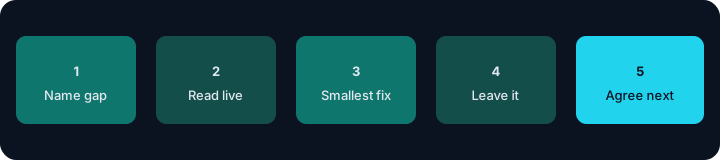
What can you not prove during an incident? Latency by customer? Whether a device in a remote POP is even in inventory? Write that down before anyone touches config.
Collectors, scrape jobs, event rules, SNMP credentials, scan ranges, log volume, sampling, boards people actually opened, and one recent ticket. The last outage is the spec.
Access delays. Firewall approvals. License keys that have not landed. Cardinality you cannot drop without an app change. On-call that is already underwater. Those go in the SOW so week two is not a surprise.
A recording rule, a resource attribute, a drop filter, a better board, an alert that pages the right person, a discovery range that matches production. We will say no to a platform swap if the current tools can do the job.
Config in Git when the repo is ready. A short runbook. An alert list with a reason for each page. If the next person cannot change it without us, the engagement failed.
Every page that still fires has a reason and a team. Rules without either get retired. Proof is a past outage, not a dashboard screenshot.
Standard polling first. Gear not on a vendor supported list goes through a test lab: MIBs, OID targets, trap samples, then a written map into the event path. Production devices are not the lab.
Collectors only watch what they can reach. Ports, sources, and approval time go on one page so discovery scope is not a guess after kickoff.
Subnets, credentials, ticket groups, and what “accepted” means, sized by how much of the estate is in the first scan. The client owns the network facts. We own the platform slice.
“Platform is up” is not acceptance. A service-impacting event has a name: dashboard gone, ticket bridge dead, or discovery blind on a stated share of the estate.
A short executive summary, then the technical notes. Same facts. Different length. Recommendations and next steps at the end of both.